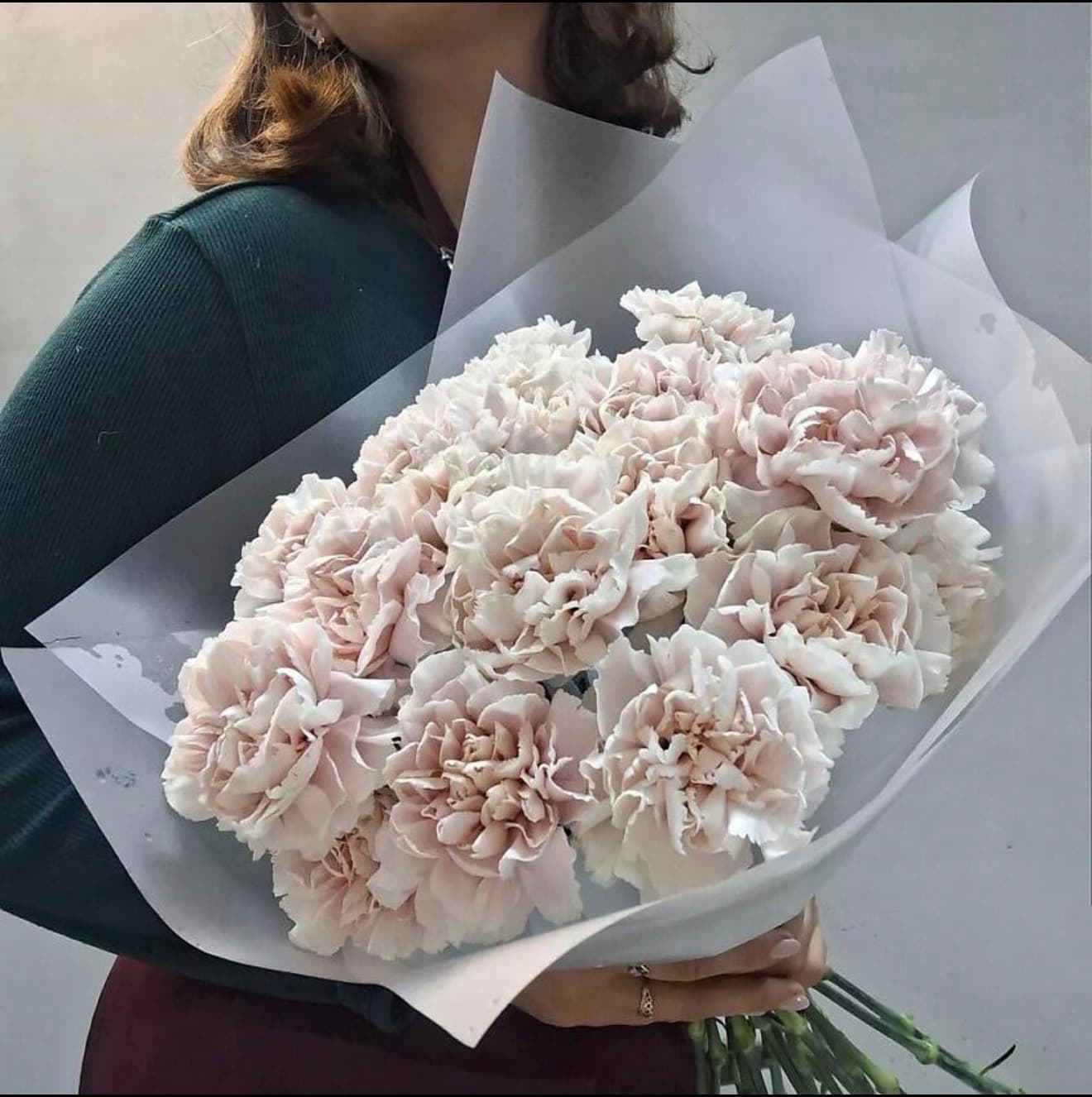
There is a moment in the history of British floristry when the carnation fell from grace. Somewhere between the mass-market petrol station bouquet and the supermarket shrink-wrapped bunch, a flower with centuries of royal heritage was reduced to an afterthought. A filler. A last resort.
At Carnation House, we think that is one of the great injustices of modern taste. And slowly, beautifully, the rest of the world is beginning to agree.
A flower with royal credentials
Long before the carnation was stuffed into cellophane, it was a symbol of deep prestige. In Renaissance Europe, carnations appeared in royal portraits as tokens of betrothal and devotion — their appearance in a painting signalled wealth, status, and sentiment. The Dutch Masters painted them alongside tulips and roses as equals. King Charles I reportedly wore a carnation on the day of his execution. Oscar Wilde made the green carnation a symbol of aesthetic rebellion.
This is not a budget flower with a borrowed reputation. This is a flower whose reputation was stolen from it.
The science of longevity
Part of what makes carnations genuinely luxurious — rather than merely expensive — is what they do after they arrive. A premium carnation bouquet from Carnation House will last two to four weeks in a vase. Most roses are gone in ten days. Tulips rarely make it past a week. Peonies, for all their drama, can collapse in five.
Carnations have thick, waxy petals that lock in moisture. Their stems are efficient water transporters. And unlike more temperamental blooms, they hold their colour and structure right to the end — no browning edges, no drooping heads, no apology. They simply keep being beautiful.
For a luxury product, longevity is not a minor feature. It is the point.
The colour range no other flower can match
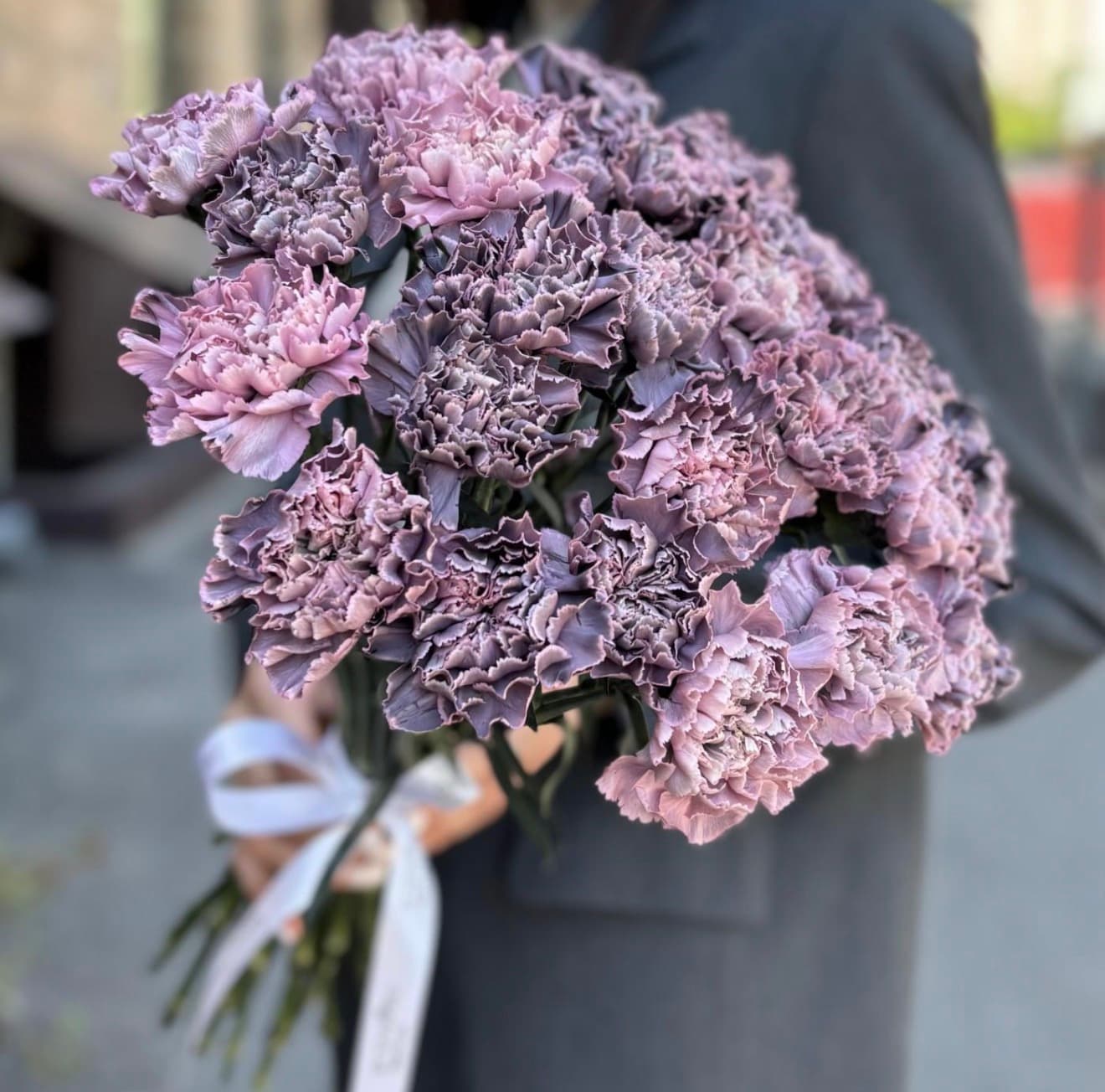
Roses give you red, pink, white, yellow, and — with some effort — a handful of coral and peach tones. Carnations give you virtually the entire colour spectrum, including shades that exist nowhere else in floristry: deep inky purples, smoky mauves, rich burgundies, saturated corals, and complex bi-colour varieties that shift from petal edge to centre.
For a florist working at the luxury end of the market, this range is not a convenience — it is a creative tool. A deep purple carnation bouquet styled in kraft paper and satin ribbon says something that no rose can quite articulate. It is specific, considered, and rare-feeling even when it is not.
What the world's leading designers already know
Carnations have been quietly rehabilitated at the highest levels of the industry for years. Alessandro Michele used them extensively during his tenure at Gucci — he understood that the carnation's perceived lowness was itself a form of subversion, a way of elevating the ordinary into the extraordinary. The florist Thierry Boutemy, who styled flowers for Sofia Coppola's Marie Antoinette and has worked with Chanel and Dior, is a vocal advocate. Interflora's luxury tier increasingly features them.
The rehabilitation is not a trend. It is a correction.
Why Hamilton made us believe in them
Stuart Totten founded Carnation House in Hamilton, Scotland, because he saw something in the carnation that the wider market had stopped looking for: integrity. A flower that does exactly what it promises, for as long as it promises, in the most beautiful way it can manage.
That is a rare quality in any product. In floristry, it is almost unique.
We are not asking you to forget what you thought you knew about carnations. We are asking you to look again. Order a Petite bouquet, put it in a clear glass vase on a windowsill, and watch it for three weeks. Then tell us it is a budget flower.
We do not think you will.
Explore our carnation bouquets — available in Petite, Signature, and Luxe sizes, delivered across the UK.